
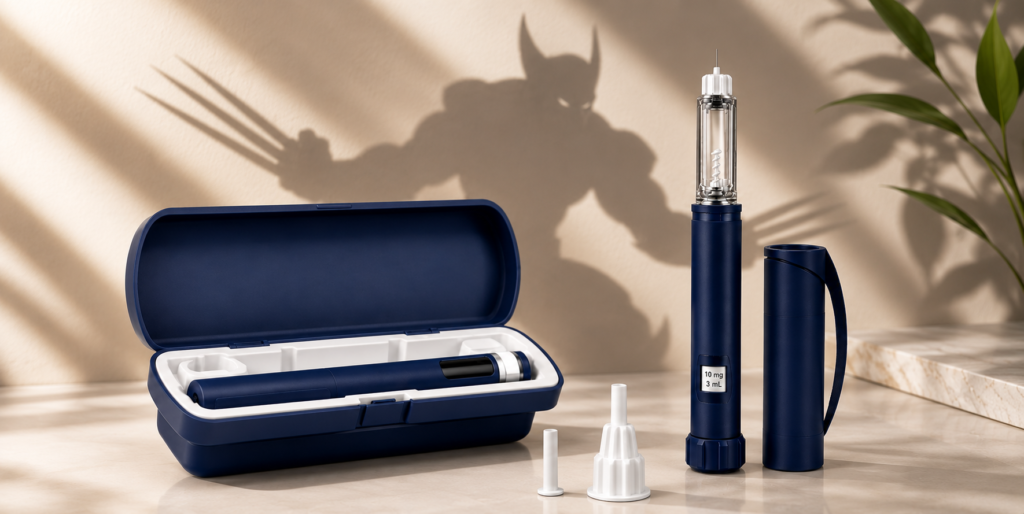
The name is a dead giveaway.
Inspired by one of the most iconic fictional healing characters, the Wolverine Stack has become a hot topic among athletes, fitness enthusiasts, and people looking to recover from injuries or surgery. But just what is it, exactly?
You have probably seen people wondering the same thing online. Can it help with muscle growth? Will it aid in recovery? And if you are thinking of trying it, how much should you inject?
These are some of the most searched questions out there, and for good reason.
While we have a lot of info on individual peptides, combining them into what is commonly referred to as the Wolverine Stack has become so popular because the peptides may work together by supporting different parts of the body’s natural repair process.
In this guide, we will break down what the Wolverine Stack is, what it is commonly used for, typical dosing protocols, potential side effects, and what to look out for before buying it online.
What Is the Wolverine Stack?
The Wolverine Stack usually combines two research peptides:
- BPC-157, a synthetic peptide derived from a protein found in human gastric juice in your stomach
- TB-500 (Thymosin Beta-4 fragment)
Each of these peptides has different ways of working that researchers believe may help with tissue repair and recovery.
They are not exactly like two peas in a pod. They target different parts of the healing process, so they are often discussed together.
Think of it like building a house.
- One peptide might be in charge of coordinating the construction crew.
- The other might be in charge of getting the building materials.
Together, they are meant to support the body’s natural recovery response.
What Does the Wolverine Stack Do?
Now we get to the million dollar question.
While research is still in the early stages, the Wolverine Stack is commonly talked about for its potential to support faster recovery and address inflammation as part of that recovery.
Muscle Recovery
Whether you are recovering after a tough workout or coming back from an injury, muscle tissue needs time to heal.
Lots of users choose the Wolverine Stack to support post exercise recovery.
Tendon and Ligament Support
Unlike muscles, tendons and ligaments get relatively little blood flow.
That is one reason recovery can take months. BPC-157 is also being studied for helping new blood vessels grow in injured tissues, which might help nourish damaged tissues by giving them a better blood supply.
Researchers are still investigating whether peptides like BPC-157 and TB-500 might help heal connective tissue. They are also looking at BPC-157 for wound healing and collagen synthesis in tendons and ligaments, and TB-500 for cell migration and new blood vessel growth during repair.
Joint Recovery
People who have experienced overuse injuries in:
- shoulders
- knees
- elbows
- hips
- ankles
often look into peptide therapy as part of their physical rehab. Some early research has also looked at using peptides for chronic pain conditions such as knee pain, though the available evidence is limited and far from definitive.
Surgical Recovery
Some doctors include peptides in their overall wellness protocols before or after surgeries, whether cosmetic or orthopedic.
A medically supervised peptide protocol should be tailored to the patient and built around the procedure and medical history, with the protocol set by the provider.
Always follow your surgeon’s advice.
Soft Tissue Repair and Injury Recovery
The Wolverine Stack is often discussed for soft tissue healing in muscles, tendons, ligaments, and related tissues, including:
- muscle strains
- tendon injuries
- ligament sprains
- connective tissue support
- exercise recovery
When you push yourself hard, you are causing microscopic tissue damage.
Recovery is when the real adaptation happens.
Some people use peptide protocols during periods of heavy training to help support recovery between workouts.
Why Combine BPC-157 and TB-500?
Each peptide has unique characteristics, but they are often stacked because they might complement each other. BPC-157 and TB-500:
- Are often used to help with localized tissue support
- Are often used to help with systemic tissue support
- Are commonly used near injury sites
- Are frequently used as part of whole body recovery protocols
- Have been studied for tendon, ligament, and GI support
- Have been studied for cell migration and tissue remodeling
TB-500 is also being looked at for systemic inflammation support during recovery. This complementary approach is how the combination got its name, the Wolverine Stack.
Wolverine Stack Benefits
People are looking into the Wolverine Stack because of its potential to help with:
- Muscle recovery
- Tendon healing
- Ligament recovery
- Joint support
- Mobility
- Exercise recovery
- Post surgical recovery
- Soft tissue repair
- Athletic performance recovery
- Reduced downtime between workouts
Just keep in mind that these uses are based on ongoing research and clinical interest, and different types of recovery may respond in different ways. The FDA has not approved these peptides to diagnose, treat, cure, or prevent disease.
Wolverine Stack Protocol
There is no single right protocol. Protocols vary based on the following:
- what your provider tells you to do
- what you hope to accomplish
- how much you weigh
- the nature of the injury you are recovering from
- how long you expect healing to take
Many healthcare providers set up their peptide programs in phases, often breaking them down into a loading phase followed by a maintenance phase, to support healing and keep inflammation in check.
Never start peptide therapy without guidance from a qualified healthcare professional.
How Much Wolverine Stack Should I Inject?
This is a very common search question.
The short answer is that there is no one size fits all dosing protocol, which can be frustrating to hear.
Factors that come into play when deciding on dosing include:
- your age
- how much you weigh
- any pre existing medical conditions you may have
- what you hope to recover from
- what other medications you are taking
- exactly which peptide formulation you are using
Your prescribing provider determines the appropriate dose for your situation. Follow the instructions that come with your prescription.
Why Choose the LaviMD Wolverine Stack?
At LaviMD, we have taken the guesswork out of peptide therapy. Our Wolverine Stack comes professionally compounded with the peptides already combined and precisely measured, so there is no need to calculate doses, mix multiple vials, or worry about getting the ratio right. It is a convenient solution designed to make following your prescribed protocol simple and consistent.
The stack is delivered in our easy to use LaviMD Precision Pen, which provides a measured dose with every press. Paired with an ultra fine subcutaneous needle, the pen is designed for a comfortable injection experience that helps minimize discomfort. Whether you are new to peptide therapy or have experience with injections, the Precision Pen makes your routine quick, straightforward, and easy to follow.
Important: Use the Wolverine Stack only as directed by your licensed healthcare provider.
Who Might Be Right for the Wolverine Stack?
Some healthcare providers will talk you through peptide therapy if you are recovering from orthopedic injuries, getting ready to return to sports, healing after surgery, dealing with chronic overuse injuries, or trying to manage repetitive strain.
Some patients report improved mobility within two to four weeks, though timelines vary widely depending on the injury and treatment plan, and most patients still do best with individualized care.
A comprehensive treatment plan usually includes physical therapy, good nutrition, a full night of sleep, and the right medical care.
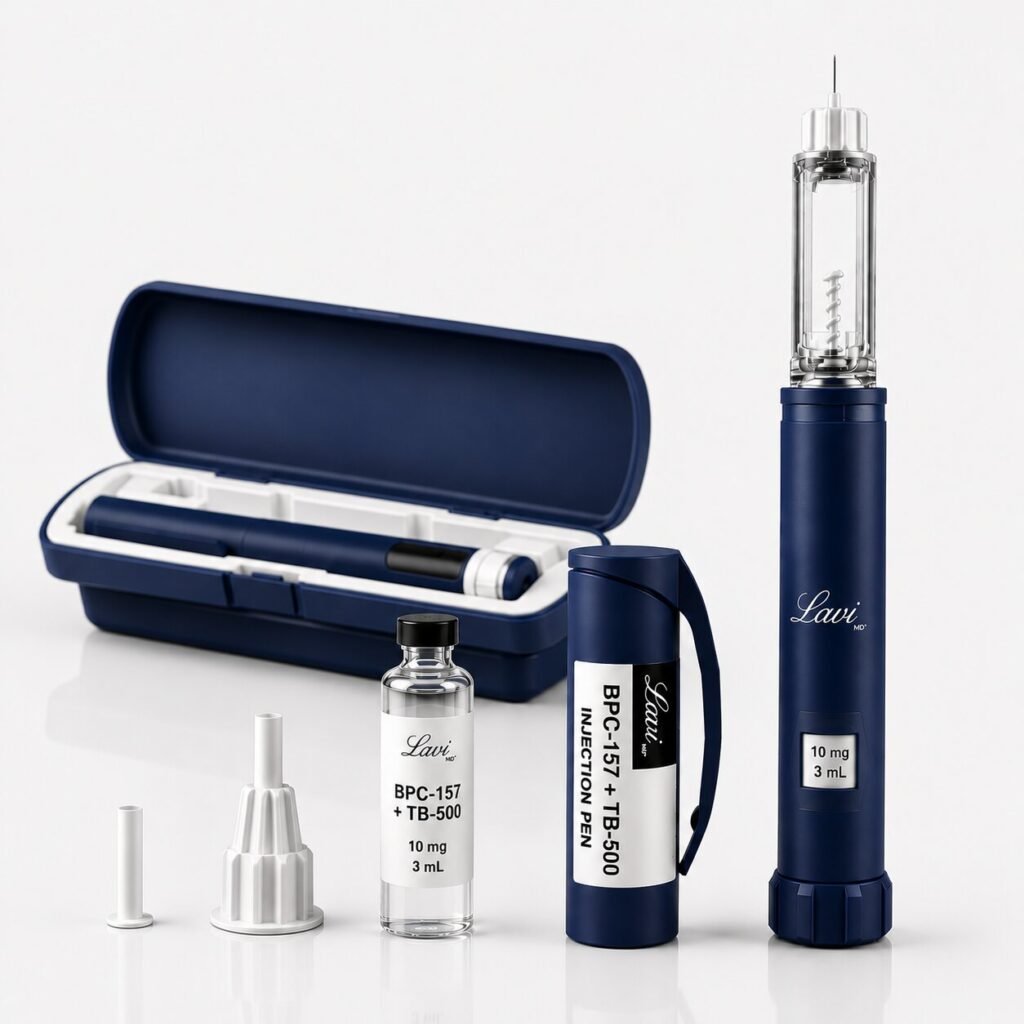
BPC-157 + TB-500 Injection Pen
Accelerate recovery and support your body’s natural healing processes with a powerful peptide combination designed for repair and resilience. BPC-157 + TB-500 helps support tissue recovery, joint comfort, and overall mobility while promoting recovery from everyday physical stress. Experience improved recovery, enhanced performance, and support for maintaining an active lifestyle.
Where to Buy Wolverine Stack Peptides Online
Because of how popular peptides have become, there are now a lot of online marketplaces, many of which sell these compounds as a “research chemical” even though the stack is not FDA approved for human use.
When choosing a provider, consider whether they:
- require a medical consultation when it is needed
- use licensed compounding pharmacies
- give clear dosing instructions
- provide transparent ingredient information
- have responsive customer support
Licensed pharmacies may compound these peptides with a prescription from a licensed provider. Be cautious of websites making unrealistic claims, promising overnight healing, or selling products without oversight. A lack of consultation or prescription requirements is a major red flag.
Frequently Asked Questions
What does the Wolverine Stack do?
The Wolverine Stack combines BPC-157 and TB-500, two peptides that are often discussed for supporting muscle, tendon, ligament, joint, and soft tissue recovery. Research is still ongoing and these peptides are not FDA approved to treat or cure medical conditions. BPC-157 is being studied for its role in angiogenesis, and TB-500 is often discussed for systemic tissue recovery and inflammation support.
What is the Wolverine Stack good for?
People often look into the Wolverine Stack during recovery from exercise, orthopedic injuries, tendon or ligament strains, and certain surgical procedures under the guidance of a healthcare professional.
How much Wolverine Stack should I inject?
There is no single universal dose. Your health history, treatment goals, the formulation, and the concentration of the peptide product all factor in. When prescribed, these peptides are commonly administered by subcutaneous injection under the skin. Always follow your clinician’s instructions.
How long does the Wolverine Stack take to work?
Experiences vary. Some people report early improvements within a few weeks, though this is largely anecdotal and timelines differ widely, while others require longer treatment periods. Recovery depends on the type and severity of the underlying condition.
Is the Wolverine Stack legal?
Regulations on peptide therapies vary greatly from one country to another, and even from one state to the next within a country. In the United States, for example, you may be able to access these therapies through a licensed healthcare provider or a compounding pharmacy in certain situations. In Australia, BPC-157 and TB-500 have been classified as schedule 4 prescription only medicines by the Therapeutic Goods Administration, meaning they are not available over the counter. Even where regulations allow access, it is always worth making sure you are sourcing peptides from a reputable, licensed source.
Will you still be able to work out on the Wolverine Stack?
That depends on your injury and your recovery plan. In most cases, the best approach is to ease back into activity gradually rather than pushing through pain. Your healthcare provider is the right person to give you personalized advice on that.
The Bottom Line on the Wolverine Stack
The Wolverine Stack has become one of the most talked about peptide combinations for people looking to support recovery from exercise, injury, or surgery. When paired together, BPC-157 and TB-500 are commonly used as part of a broader wellbeing and rehabilitation program, and they are meant to support the body’s natural repair processes. Athletes should note one additional consideration: both peptides are banned by the World Anti-Doping Agency.
As more people explore peptide therapy, it is important to go in with realistic expectations and guidance from a qualified provider. Peptides are not a substitute for proper medical care, recovery, or nutrition, and there is no evidence that the Wolverine Stack has any effect on fat loss. They can still be a useful addition to a comprehensive recovery plan.
