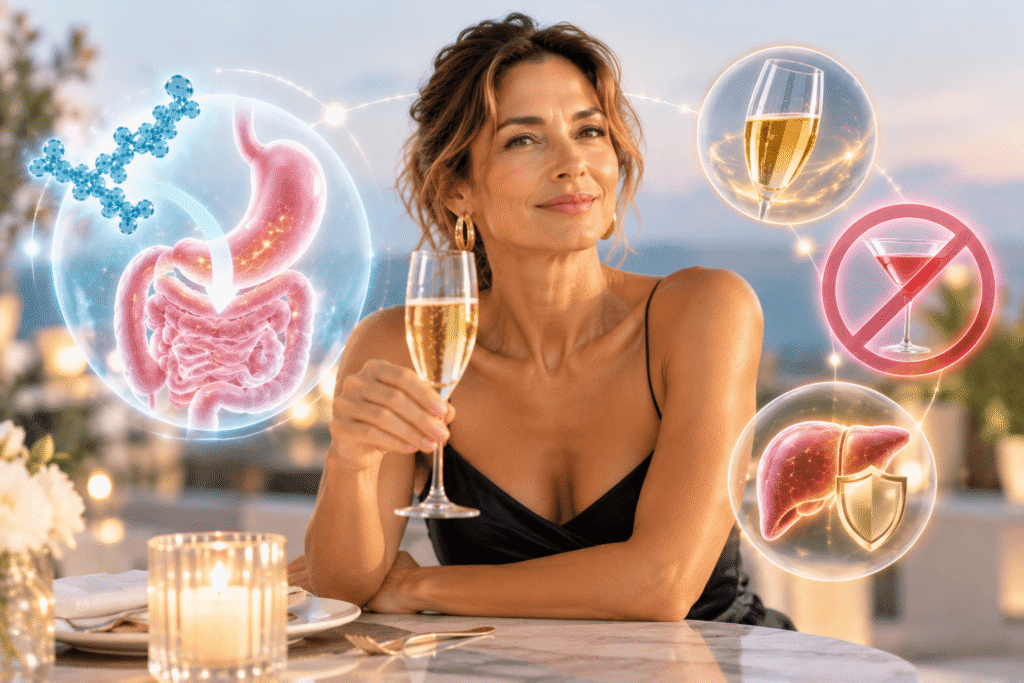
It’s one of the most common questions from people on a GLP-1 medication: you had a glass of wine at dinner or a few drinks at a wedding, your injection day is tomorrow, and now you’re not sure what to do.
The short answer: for most people, a moderate amount of alcohol is not a reason to skip or delay your GLP-1 dose.There’s no known direct chemical interaction between alcohol and GLP-1 medications. But alcohol and GLP-1s affect many of the same systems (your stomach, your blood sugar, your pancreas, and your hydration), so how much you drank and how you feel afterward both matter.
How GLP-1s Work (and Why Alcohol Enters the Picture)
GLP-1 (glucagon-like peptide-1) is a hormone your gut releases after you eat. GLP-1 medications mimic it, sending signals that:
- Slow gastric emptying, so food and drink leave your stomach more gradually
- Boost insulin release when blood sugar rises after a meal
- Suppress glucagon, the hormone that tells your liver to release sugar
- Quiet appetite signals in the brain, reducing hunger and “food noise”
Alcohol touches nearly every one of these. It irritates the stomach lining, blocks the liver from releasing stored glucose, acts as a diuretic, and stresses the pancreas. That overlap is why the combination deserves some thought.
What Happens with Alcohol Consumption on a GLP-1
Alcohol often hits differently. Many people on GLP-1s notice they feel the effects of alcohol differently, and many find they simply want less of it. Because stomach emptying is slower, alcohol reaches the bloodstream more gradually, and as a central nervous system depressant it can impair coordination and memory. That doesn’t make drinking “safer.” It means your usual sense of how much you’ve had can be off, so pace yourself.
Stomach side effects get worse. Nausea, vomiting, reflux, and diarrhea are the most common GLP-1 side effects, and alcohol amplifies every one of them. Carbonated drinks, sugary cocktails, and drinking on an empty stomach are the biggest culprits. In some people, alcohol flush reactions can show up within 1 to 60 minutes of ingestion.
Low blood sugar is a real risk for some people. GLP-1s on their own rarely cause hypoglycemia, but alcohol blocks your liver’s ability to release glucose, and that effect can last for hours after your last drink. If you also take insulin or a sulfonylurea (such as glipizide or glyburide), the risk of a low overnight or the next morning is significant. The WHO states there is no safe level of alcohol consumption. Shakiness, sweating, confusion, and dizziness can easily be mistaken for being drunk or hungover.
Dehydration adds up. Reduced appetite on a GLP-1 often means reduced fluid intake. Add alcohol’s diuretic effect and possible vomiting, and dehydration can follow quickly. Severe dehydration strains the kidneys. Those health risks can affect the whole body, not just your energy levels in the moment.
Your pancreas is carrying extra load. Heavy drinking is a leading cause of pancreatitis, and pancreatitis is a listed warning for GLP-1 medications. Severe upper-abdominal pain that radiates to your back, especially with vomiting, needs immediate medical attention. Alcohol is linked to over 200 diseases and health conditions, including higher risk of breast, liver, and colorectal cancers. With heavier intake, binge drinking also raises the risk of injuries and alcohol overdose, and the health effects can extend to other organs well beyond the digestive tract.
So, Should You Take Your Dose?
If you had one or two drinks and feel fine: take your dose as scheduled. There’s no need to skip it.
If you drank heavily, or you’re nauseated, vomiting, or badly hungover: wait until you feel well, you’re keeping fluids down, and you’re eating normally. Injecting while already sick stacks GLP-1 nausea on top of alcohol nausea. Weekly GLP-1 medications have a window for taking a late dose, generally within 4 to 5 days of the missed dose depending on your specific medication. Check your product’s instructions or ask your pharmacist.
Don’t double up. If you skipped a dose, don’t take two to “catch up.”
If you use insulin or a sulfonylurea: talk with your prescriber about how to handle drinking days. Check your blood sugar before bed and in the morning after drinking.
Smart Moderate Drinking Habits on a GLP-1
- Eat first. Never drink on an empty stomach, which is easy to do when your appetite is suppressed.
- Alternate with water. One glass of water between every drink protects your hydration and your stomach.
- Choose simpler drinks. Skip sugary, creamy, or fizzy cocktails. Spirits with a non-carbonated, zero-sugar mixer, or a dry wine, are gentler.
- Set a limit in advance. Your tolerance has likely changed, so decide your alcohol intake before you start and count by standard drink; in the U.S., one contains about 14 grams of alcohol. The Dietary Guidelines recommend adults drink in moderate drinking ranges or not at all, including up to one drink per day for women. Binge drinking means five or more drinks on one occasion.
- Remember the calories. Alcohol is calorie-dense and lowers inhibitions around food, both of which work against the goals your GLP-1 supports.
The Unexpected Upside: GLP-1s and Alcohol Use Disorder Cravings
Many people on GLP-1 medications report that they lose interest in drinking. This goes beyond anecdote, including signals seen in patients in early clinical trials. GLP-1 receptors sit in the brain’s reward circuitry, the same dopamine pathways alcohol activates. By dampening that reward response, GLP-1s blunt the “pull” of a drink much the same way they quiet food cravings. Early clinical trials of GLP-1s in people who drink heavily have shown reduced cravings and fewer drinks on drinking days, and larger studies are underway to test GLP-1s as a treatment for alcohol use disorder, including alcohol dependence.
Alcohol use disorder is also linked to cognitive impairment, and withdrawal can trigger serious health problems, with severe cases including seizures.
For many people, this is a welcome side effect: fewer drinks, better sleep, and less work undoing the effects of alcohol on their weight and metabolism goals.
Health Risks: When to Call Your Doctor
Seek care right away if you experience severe symptoms, including possible alcohol withdrawal seizures:
- Severe abdominal pain, especially radiating to the back
- Vomiting that won’t stop or signs of dehydration (very dark urine, dizziness on standing, little or no urination)
- Symptoms of low blood sugar that don’t improve after eating or drinking something with sugar
- Confusion or fainting, especially since alcohol intoxication can make serious symptoms harder to recognize
The Bottom Line
A drink or two doesn’t mean you need to skip your GLP-1, but drinking alcohol still calls for caution. Take your dose as planned, eat before you drink, stay hydrated, and keep your intake modest. If you drank heavily or feel unwell, wait until you’ve recovered, then take your dose within your medication’s catch-up window. And if you notice you want alcohol less since starting your GLP-1, that’s the medication working on your brain’s reward system — one more benefit to add to the list.
Alcohol consumption during pregnancy can cause fetal alcohol syndrome, so a person who is pregnant should avoid alcohol.
This article is for educational purposes and isn’t a substitute for personalized medical advice. Talk with your prescriber about alcohol use, especially if you take other diabetes medications; response can differ based on individual factors, and even low levels of alcohol carry risk, so modest intake and timing still matter.
